

Growing okra indoors can be a rewarding endeavor for any plant lover.
With the right conditions, one can enjoy fresh okra year-round, even without outdoor space.
This versatile vegetable not only enhances meals but also adds beauty to indoor gardens with its tall green stalks and striking flowers.
To successfully grow okra indoors, it’s essential to understand its specific needs, like sunlight, temperature, and humidity.
Selecting the right variety and using suitable potting methods can greatly affect growth and fruit production.
By paying attention to watering, fertilizing, and pest management, anyone can cultivate healthy okra plants inside their home.
Key Takeaways
- Choose a variety of okra suited for indoor growth.
- Provide adequate light and water for optimal plant health.
- Manage pests and care for plants to ensure fruitful yields.
Understanding Okra’s Growth Requirements
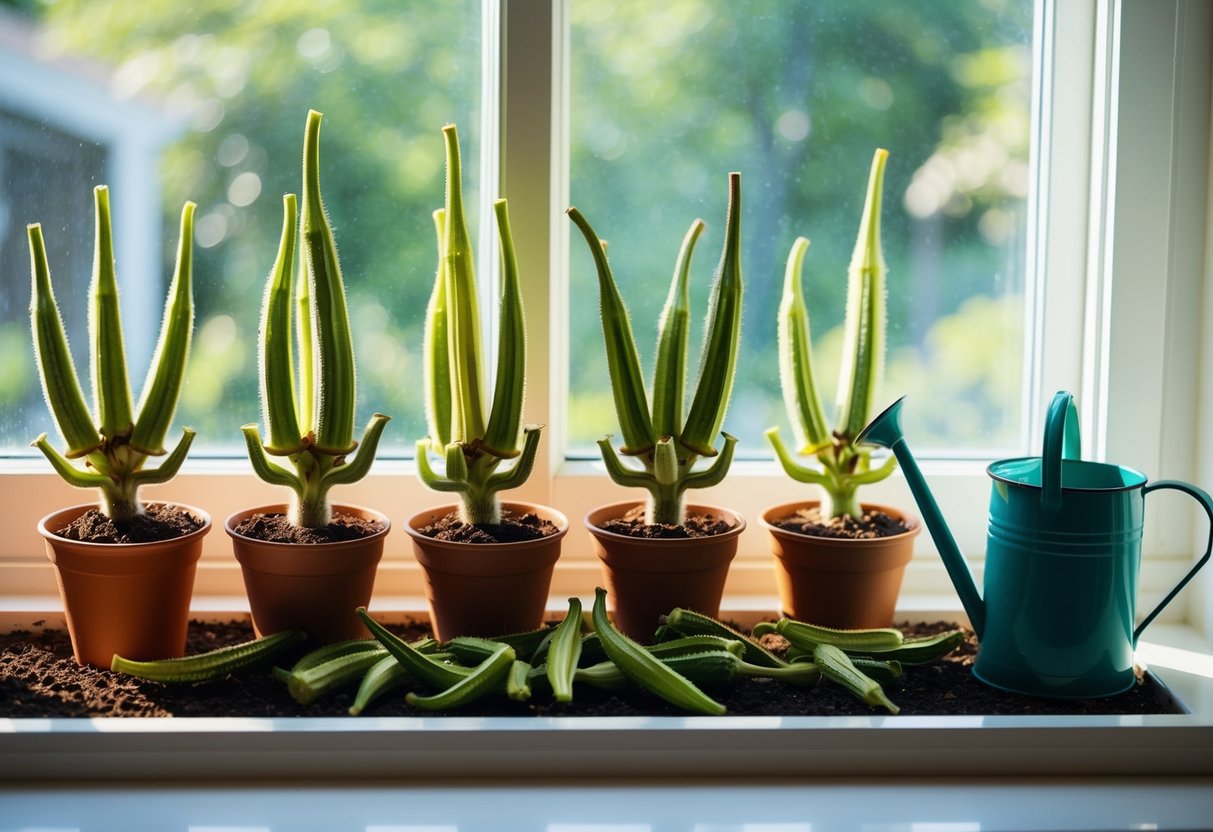
Okra thrives under specific conditions to grow well indoors. Key requirements include proper lighting, an ideal temperature range, and nutrient-rich soil. Each factor plays a significant role in the plant’s overall health and productivity.
Lighting Conditions for Indoor Okra
Okra needs a lot of light to grow effectively. It requires 6 to 8 hours of direct sunlight each day.
For indoor growth, placing the plants near a south-facing window is ideal.
If natural sunlight is limited, using grow lights can help.
Full-spectrum LED or fluorescent lights set up about 12 to 24 inches above the plants work well.
Rotate the pots regularly to ensure even light exposure on all sides. This practice helps the plants develop evenly, preventing them from leaning toward the light source.
Temperature and Humidity Preferences
The ideal temperature for growing okra indoors is between 70°F and 90°F (21°C to 32°C). Okra prefers warm conditions. If the temperature drops below 60°F (15°C), growth may slow dramatically.
Humidity levels between 40% and 60% are suitable. Using a humidifier can help achieve these levels, especially in dry indoor conditions.
Additionally, it’s essential to avoid drafts from windows or air conditioning, as sudden temperature changes can stress the plants and hinder their growth.
Soil and Nutrition Needs
Okra thrives in well-draining, rich soil. A mixture of potting soil, compost, and perlite or vermiculite creates an ideal environment.
Ensure that the soil pH is between 6.0 and 7.0 for optimal nutrient absorption. Regularly adding organic matter can enhance soil health.
Fertilizing every 4 to 6 weeks with a balanced, all-purpose fertilizer is beneficial. This routine provides the necessary nutrients for strong growth and pod development.
Monitoring the soil moisture is also crucial; it should be kept consistently moist but not soggy to prevent root rot.
Selecting the Right Okra Variety
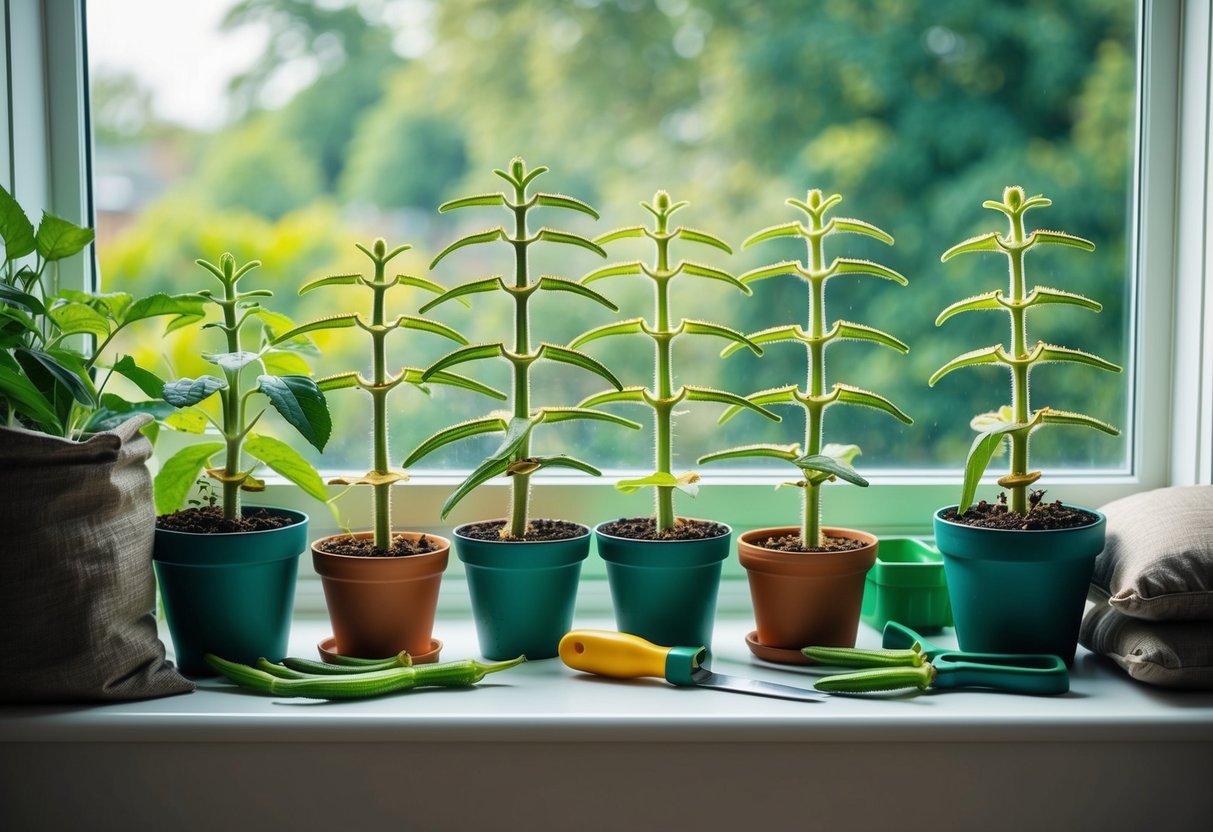
Choosing the correct okra variety is essential for successful indoor gardening. Different varieties offer unique traits that can enhance growth and yield.
This section focuses on suitable dwarf varieties and the time it takes for them to mature, which are crucial factors for indoor cultivation.
Dwarf Varieties Suitable for Indoors
Dwarf okra varieties are ideal for indoor gardening. They typically grow shorter than standard okra plants, making them easier to manage within limited space.
Popular dwarf varieties include:
- Baby Bubba: This compact plant reaches about 3 feet tall and produces small, tender okra pods. It matures in about 55 days.
- Clemson Spineless: Although not as dwarf as Baby Bubba, it can still be grown indoors. It grows around 4 feet tall and is known for its spineless pods.
When selecting a variety, look for seeds that are specifically labeled for container planting. This ensures they will thrive well in confined spaces.
Time to Maturity Considerations
Time to maturity varies among okra varieties and is an important factor when growing indoors.
Dwarf varieties generally mature faster than standard ones.
- Baby Bubba matures in approximately 55 days, making it a great choice for those who want quick results.
- Clemson Spineless, usually maturing in about 60-80 days, requires more patience but can yield a more abundant harvest.
Considering time to maturity helps in planning crop cycles and harvest. Quick-maturing varieties can provide fresh produce faster, which is key in indoor setups where space might be limited.
Germinating Okra Seeds Indoors
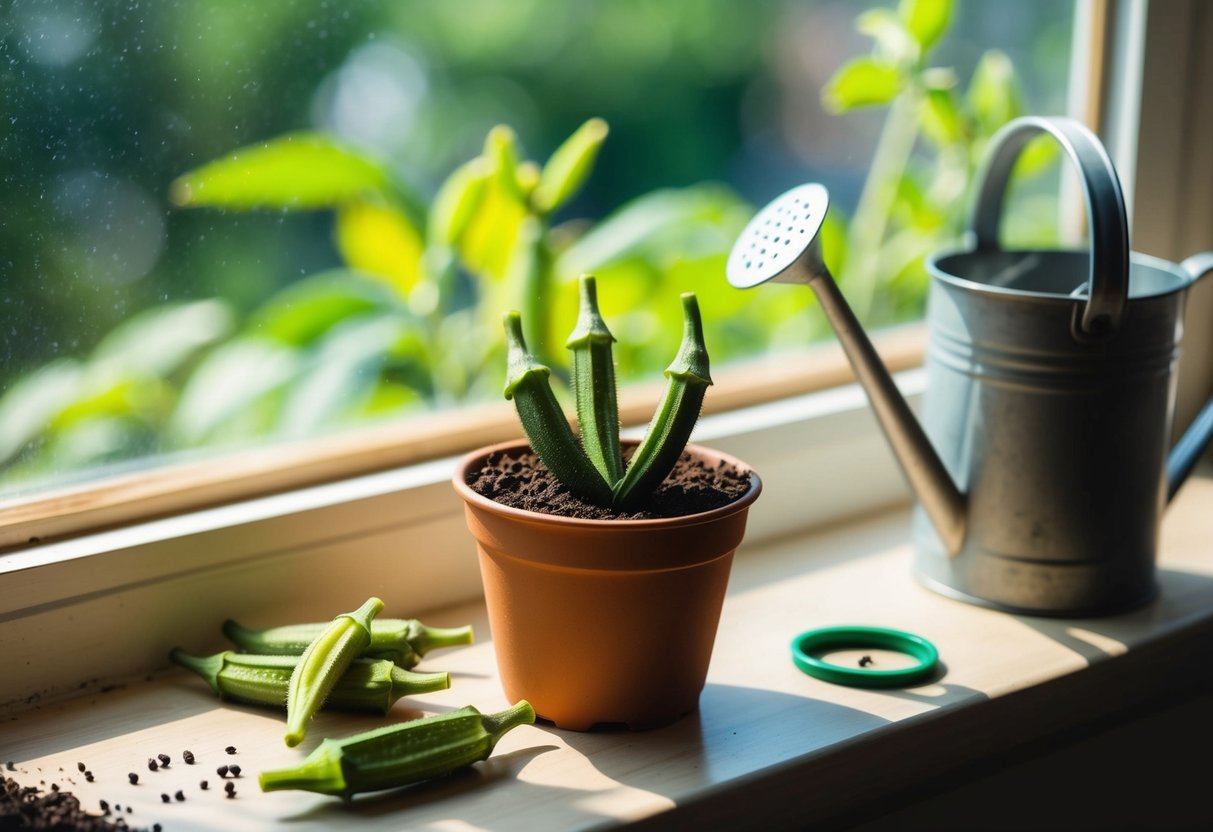
To successfully grow okra indoors, proper seed germination is essential. This process begins with preparing the seeds and then using effective sowing techniques to encourage optimal growth.
Seed Preparation and Soaking
Before planting, okra seeds should be prepared to enhance their germination rates. Scarifying the seed coat can help. This involves gently nicking the outer layer to allow water to penetrate.
Soaking the seeds in warm water for about 12 hours can also promote germination. This method softens the seed coat, making it easier for the seed to sprout.
Once soaked, it’s best to plant the seeds in a well-draining potting mix. The soil temperature should be kept between 70°F to 95°F (21°C to 35°C) for optimal results.
Using biodegradable seed pots can be beneficial, as they minimize transplant shock later on.
Sowing Techniques for Optimal Growth
When it comes to sowing, timing and depth are important.
Okra seeds should be planted about 1 inch deep in the soil. This depth helps ensure healthy root development.
Spacing is also key. If starting from seed, it’s best to sow them 2-3 inches apart to give them ample room to grow.
Once the seedlings develop, thinning may be necessary to allow the strongest plants to flourish.
Maintaining a consistent moisture level is crucial during germination.
It’s essential to water regularly but avoid overwatering, as this can lead to root rot.
Using a heat mat can speed up the germination process, especially if indoor temperatures are lower. Keeping humidity levels moderate can also help the seedlings thrive until they are ready to be transplanted outdoors.
Planting and Potting Strategies
Successful planting and potting strategies are crucial for growing okra indoors. Proper container selection and transplanting techniques ensure healthy growth and a productive harvest.
Container Selection and Drainage
Choosing the right container is essential for okra plants. It is recommended to use pots that are 3 to 5 gallons in size. This size provides enough space for root development and optimal growth.
Containers should have drainage holes to prevent water from accumulating at the bottom. Excess moisture can lead to root rot, which is harmful to the plant.
A well-draining potting mix is important, with a pH range of 6.5 to 7.0. Adding compost or composted manure can enhance soil quality. This mix provides essential nutrients for the okra plants.
Regularly check the moisture levels in the soil to ensure it remains adequately moist but not soggy.
Transplanting Seedlings
When it is time to transplant seedlings, timing is crucial.
Ideally, seedlings should be around 4 to 6 weeks old and have a few true leaves. At this stage, they are ready for transplanting into larger containers.
Before moving seedlings, water them thoroughly to minimize shock.
Carefully remove them from their original containers, gently handling the root ball.
Transplant seedlings into the prepared containers, covering the roots with soil. The seedlings should be planted 12 to 18 inches apart to allow enough space for growth.
After transplanting, water the plants well and place them in a warm area with plenty of sunlight. This will help facilitate strong growth.
Watering and Fertilising Indoor Okra
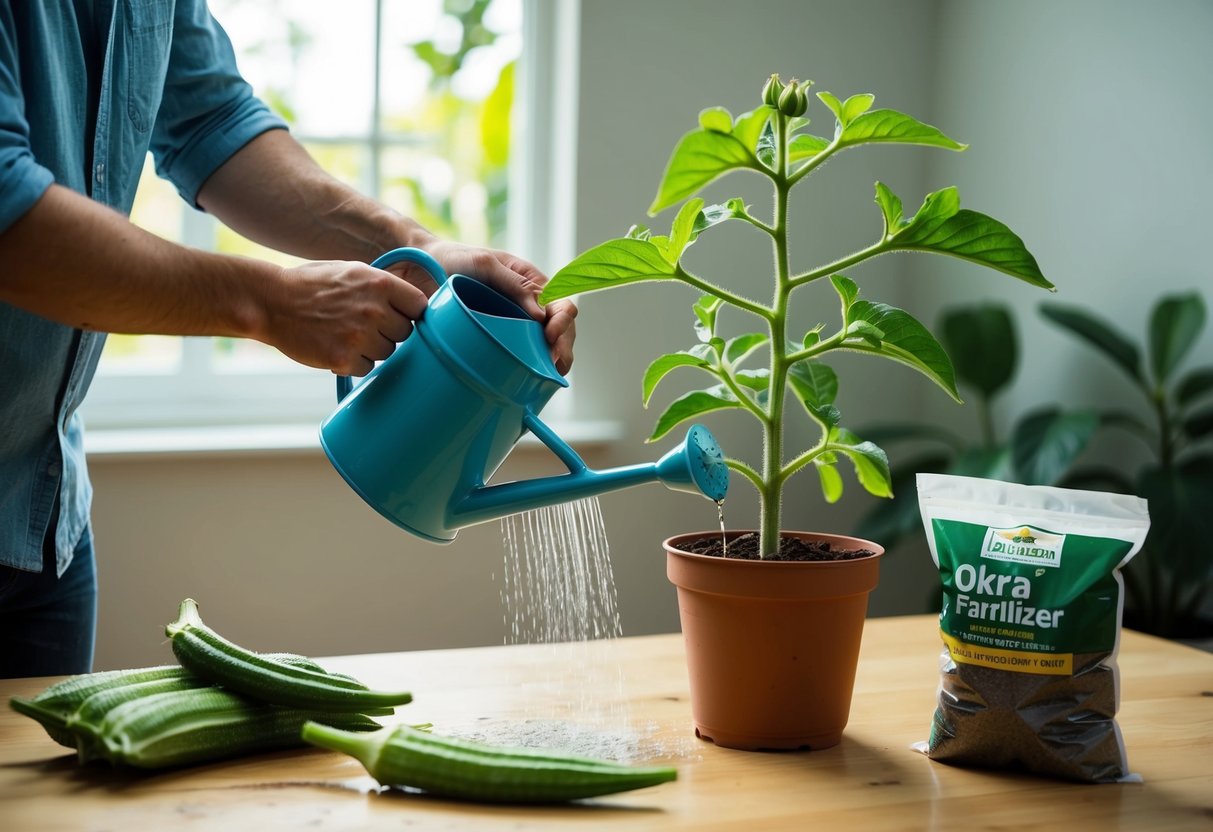
Proper watering and fertilizing are crucial for healthy indoor okra plants. Ensuring the right amount of moisture and nutrients helps promote vigorous growth and better yields.
Watering Schedule and Techniques
Okra needs consistent watering to thrive indoors. The ideal schedule is to check the soil moisture every few days.
When the top inch of soil feels dry, it is time to water.
- Technique: Water the soil until it is moist but not soggy. This prevents root rot.
- Drainage: Use pots with drainage holes. This allows excess water to escape.
In warmer months, okra may require more frequent watering. Conversely, during cooler months, reduce the frequency.
Monitoring the humidity levels is also important; indoor air can be dry, so misting the plants occasionally can benefit their growth.
Choosing Fertilizers for Okra
Selecting the right fertilizer is key for okra’s development.
Look for a balanced fertilizer like 10-10-10 or one higher in potassium. This supports flower and fruit production.
- Application: Fertilize every four to six weeks during the growing season.
- Method: Mix the fertilizer into the top layer of soil or dilute it in water for a liquid feeding.
Organic options like compost or worm castings can also enhance growth. They provide slow-release nutrients without the risk of chemical buildup.
Feeding indoor okra properly ensures robust plants and a bountiful harvest.
Pollination Methods for Indoor Okra
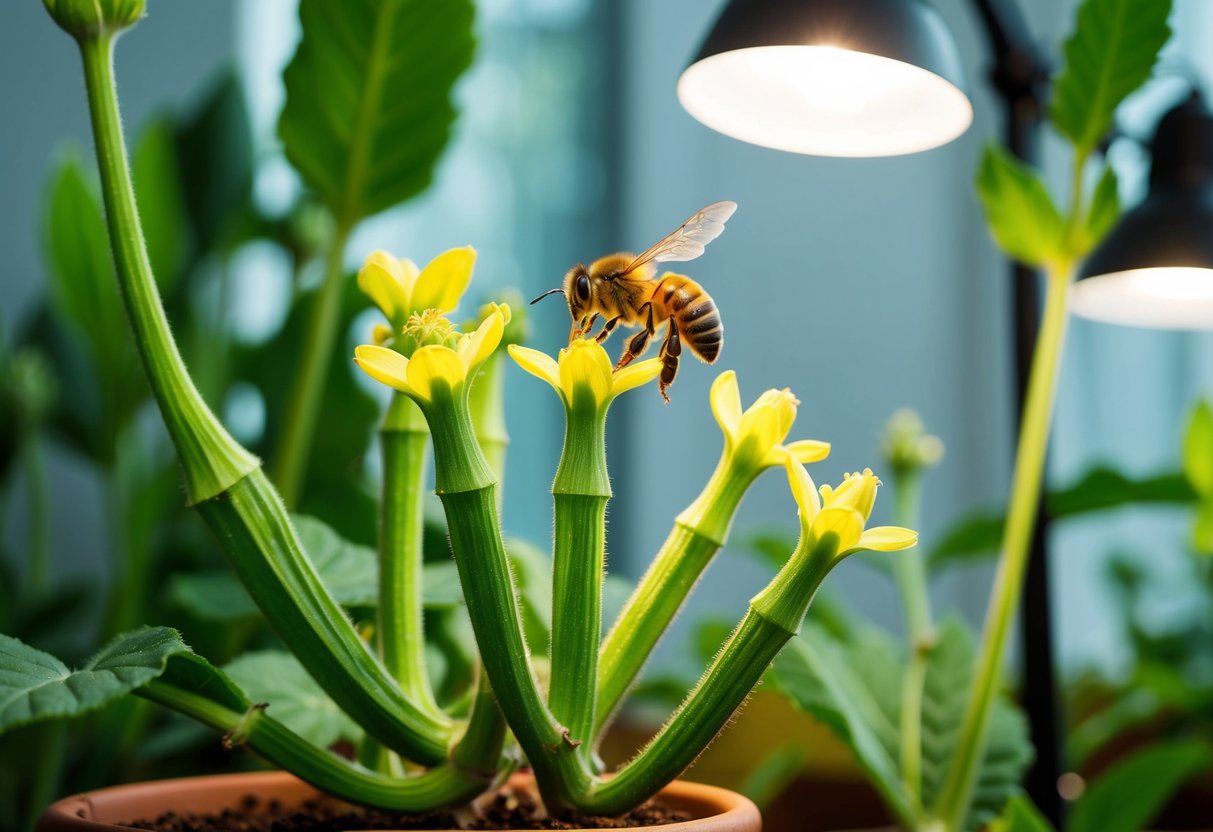
Pollination is crucial for growing okra indoors. Without it, plants will not produce pods. Here are effective methods for pollinating indoor okra.
- Hand Pollination: This method is simple and effective. A small brush or cotton swab can be used.
- Collect Pollen: Gently brush the inside of a male flower to gather pollen.
- Transfer Pollen: Move the pollen to the stigma of a female flower.
- Repeat: Do this for multiple flowers to ensure successful pollination.
- Encourage Pollinators: If the plants are near a window, natural pollinators may visit.
- Use a Fan: Running a small fan can help mimic wind. This motion can assist with moving pollen between flowers.
- Timing: Pollination should occur in the morning when flowers are open. This is when they are most receptive.
By employing these methods, an indoor gardener can increase the yield of their okra plants. This can lead to more successful growth and fruit production.
Pest Management in Indoor Okra Cultivation
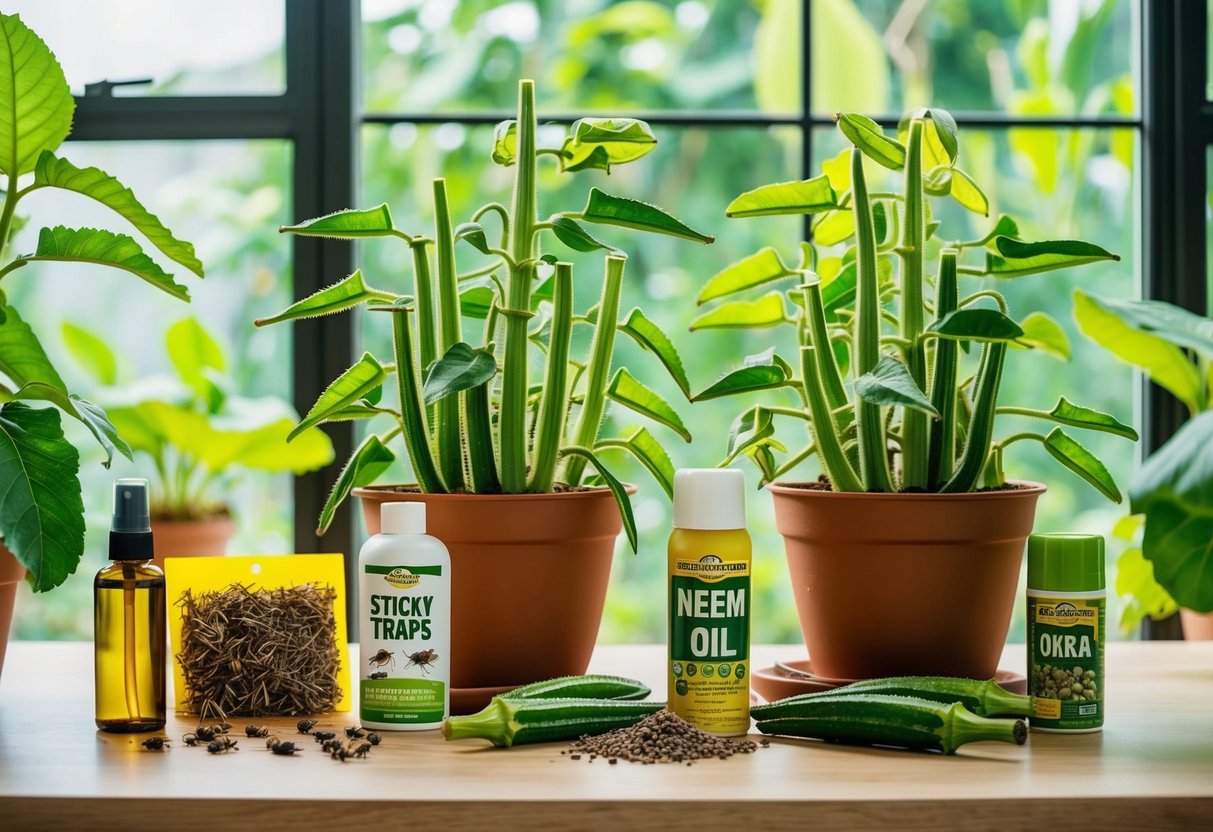
Indoor okra plants can attract pests that may harm their growth. Common pests include aphids, spider mites, and whiteflies.
Identification of Pests
- Aphids: Small, soft-bodied insects that often cluster on new growth.
- Spider Mites: Tiny and often found on the undersides of leaves, usually leaving a fine webbing.
- Whiteflies: Small, white moth-like insects that fly up when plants are disturbed.
Management Techniques
- Regular Inspection: Checking plants weekly helps catch pests early.
- Natural Remedies:
- Mix all-purpose flour with diatomaceous earth in a 2:1 ratio to control aphids.
- Spray plants with a mixture of water and neem oil for spider mites.
- Mechanical Control: Remove pests by hand or use a strong stream of water to dislodge them.
Preventative Measures
- Good Air Circulation: Ensure adequate airflow to reduce humidity, which can attract pests.
- Healthy Plants: Fertilize and water plants appropriately to keep them strong, making them less susceptible to infestations.
- Isolation: Keep new plants separate for a few weeks to monitor for pests before introducing them.
Following these pest management strategies will help maintain healthy indoor okra plants. Regular monitoring and timely action are key to successful cultivation.
Harvesting and Storing Indoor-Grown Okra
Harvesting okra can begin when the pods are about 2 to 3 inches long. It is best to pick them while they are tender.
Waiting too long can result in tough, woody pods.
To harvest, use scissors or a sharp knife to cut the stem just above the cap of the pod. This method prevents damage to the plant and promotes further growth.
Okra should be picked every other day during its peak producing season. This encourages the plant to produce more pods.
Once harvested, okra should be stored properly to maintain freshness.
Guidelines for Storing Okra
- Fresh Storage: Place unwashed okra in a paper bag. Store it in the refrigerator’s vegetable drawer. It can last up to 3 days.
- Freezing: Wash and cut the okra into desired sizes. Blanch the pieces in boiling water for about 3 minutes. Then, shock them in ice water and drain. Pack in freezer bags, removing as much air as possible.
- Timing: Frozen okra can be stored for up to 8-12 months.
Ongoing Care and Maintenance Tips
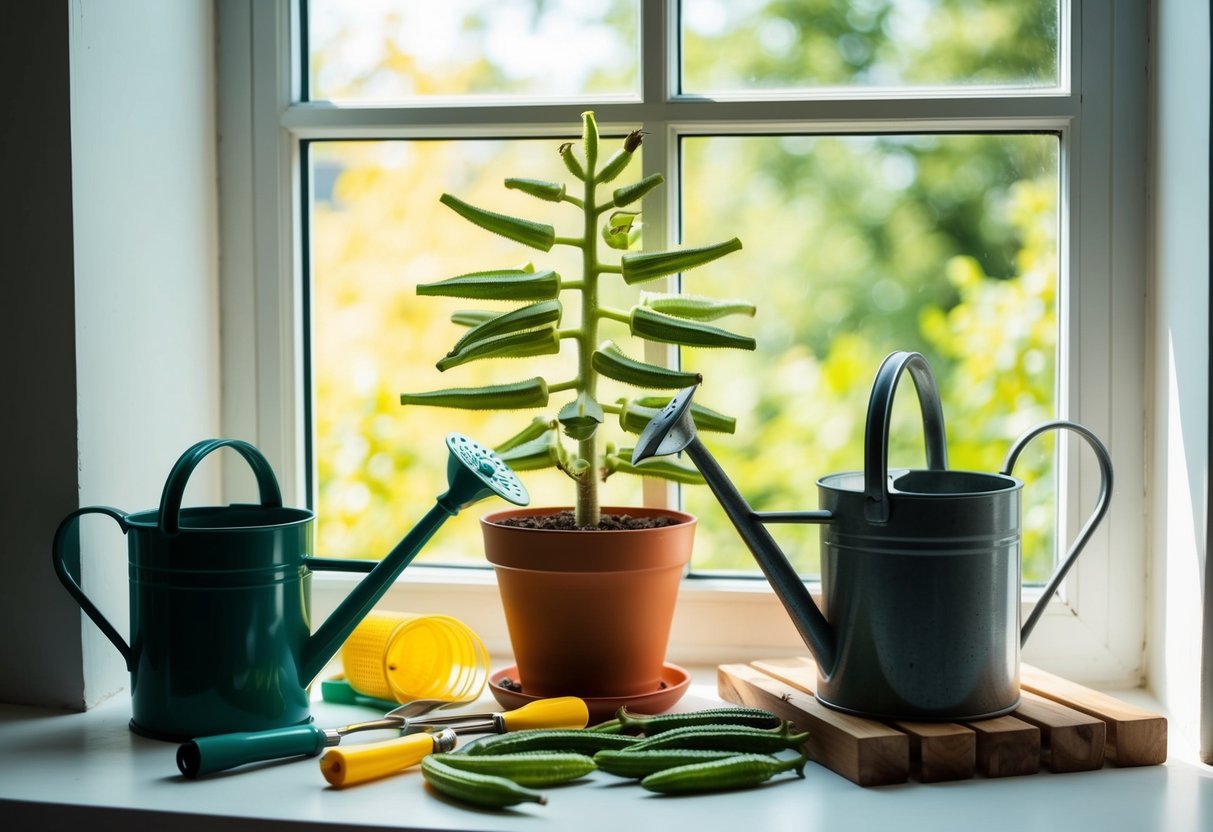
Proper ongoing care and maintenance are essential for healthy okra plants, especially when grown indoors. This includes implementing pruning techniques and ensuring that plant health is monitored regularly.
Pruning and Support Structures
Pruning helps promote bushier growth and increases pod production. As the okra plant grows, the top can reach 5–6 feet tall.
To keep the pods within easy reach, it’s beneficial to cut back the top of the plant.
Steps for Pruning:
- Determine Height: Monitor the growth and decide when to prune.
- Use Clean Tools: Always use clean scissors or pruning shears to prevent disease.
- Cut Wisely: Trim back the top third of the plant at strategic locations.
In addition to pruning, providing support structures can prevent the plant from bending or breaking. Staking the plant helps it stand tall and allows for better light exposure.
Monitoring Plant Health
Regular checks on plant health can prevent issues before they escalate. Look for signs of pests, such as aphids or spider mites, which can damage the leaves.
Health Monitoring Checklist:
- Leaf Inspection: Check for discoloration or wilting.
- Soil Moisture: Ensure the soil is consistently moist but not waterlogged.
- Fertilization: Feed with a balanced fertilizer every 4–6 weeks to promote growth.
Pay attention to environmental factors, like temperature and humidity, which should be suitable for okra.
Frequently Asked Questions
Growing okra indoors requires attention to several specific conditions and practices. Proper light, temperature, and moisture are crucial for successful growth. Here are some common questions that can help with the process.
What are the necessary conditions for growing okra seeds indoors?
Okra seeds need warm temperatures to germinate well. Ideally, the soil temperature should be between 75-85°F.
They also require bright light, so placing them near a sunny window or under grow lights is important. Additionally, well-draining and nutrient-rich soil supports healthy growth.
What steps should be followed to plant okra indoors?
To plant okra indoors, start by filling seed trays with potting soil. Plant two to three seeds per tray, covering them with about 1 inch of soil.
Water gently to keep the soil moist but not soggy. Provide warmth and light for optimal germination.
How long does it typically take for okra to mature when grown indoors?
Okra usually takes about 50-65 days to mature when grown indoors. The timeline can vary based on specific conditions such as temperature and light.
Regular monitoring of the plants can help ensure they reach their full growth potential.
Can you provide tips for successfully growing okra in containers?
When growing okra in containers, choose pots that are at least 5 gallons in size. This allows enough space for the roots to grow.
Use high-quality potting mix to retain moisture while providing good drainage. Regular watering and fertilizing will also support healthy growth.
What is the recommended plant spacing for okra to thrive indoors?
When growing okra indoors, it is best to space the plants about 12-18 inches apart. This spacing allows adequate air circulation and light penetration, which helps prevent overcrowding. Ensuring enough space promotes healthier plants and improves pod production.
What are some common challenges when growing okra indoors and how to overcome them?
One common challenge is insufficient light, which can lead to leggy growth. Using grow lights can help mitigate this issue.
Pests like aphids and spider mites may also appear. Regularly checking plants and using organic insecticidal soap can help manage these problems effectively.
